PSM Process Automation

PSM Process Automation

Streamline your Process Safety Management (PSM) with automation. Improve hazard analysis, incident management, compliance audits, and overall operational safety for high-risk industries. Request a demo today! Process Safety Management (PSM) is a comprehensive set of regulations and practices designed to prevent major industrial accidents involving highly hazardous chemicals (HHCs). While traditionally focused on administrative controls, human procedures, and equipment integrity, the integration of process automation is revolutionizing PSM, transforming it from a reactive compliance exercise into a proactive, data-driven approach to risk mitigation. PSM process automation leverages advanced technologies to enhance safety, improve operational efficiency, and ensure continuous regulatory compliance in facilities handling dangerous substances.

PSM Process Automation

The Paradigm Shift: From Manual PSM to Automated Safety Intelligence

Historically, PSM relied heavily on manual data collection, periodic audits, and human interpretation of complex process variables. This approach, while essential, had limitations:

  • Human Error: Reliance on manual checks and procedures introduced the risk of human oversight, fatigue, and inconsistent application of safety protocols.
  • Reactive Approach: Many PSM elements, like incident investigation, were inherently reactive, occurring after an event rather than proactively preventing it.
  • Data Silos: Information relevant to process safety (e.g., equipment data, alarm logs, maintenance records) often resided in disparate systems, making holistic analysis difficult.
  • Compliance Burden: Manual documentation and reporting for regulatory compliance were time-consuming and prone to errors.
  • Limited Real-time Insights: Operators and safety personnel often lacked real-time visibility into the health and safety status of critical processes.

The advent of process automation in PSM addresses these limitations by providing real-time data, predictive capabilities, automated verification, and integrated platforms, leading to a truly intelligent safety management system.

Pillars of PSM Process Automation

PSM process automation is built upon several key technological pillars that integrate seamlessly to create a robust safety ecosystem:

  1. Automated Process Monitoring and Control:
    • Advanced Sensor Networks: Beyond basic temperature and pressure, modern sensors (e.g., gas detectors, flame detectors, vibration sensors, level sensors, flow meters) provide continuous, high-fidelity data on process conditions and potential deviations.
    • Distributed Control Systems (DCS) & PLCs: These form the backbone of automated control, executing complex safety interlocks, emergency shutdowns (ESD), and regulating process parameters within safe operating limits.
    • Smart Alarms and Event Management: Automated systems filter and prioritize alarms, reducing “alarm floods” and ensuring operators receive actionable alerts. Integration with event management systems can automatically trigger safety responses.
    • Real-time Process Analytics: Software platforms continuously analyze sensor data against defined safe operating limits (SOLs) and operating envelopes, flagging anomalies that could lead to hazardous situations.
  1. Integrated Safety Instrumented Systems (SIS):
    • Automated Safety Functions: SIS are designed to bring a process to a safe state upon detection of a hazardous condition. Automation ensures that safety interlocks are tested regularly and respond rapidly and reliably when needed.
    • Proof Testing Automation: Automated systems can facilitate and even partially execute proof tests for SIS components (e.g., valves, sensors, logic solvers), ensuring their continued functionality without extensive manual intervention.
    • Bypassing and Override Management: While manual overrides are sometimes necessary, automated systems provide strict controls, logging, and authorization processes for bypassing safety functions, minimizing human error.
  1. Digitalization of PSM Elements:
    • Management of Change (MOC) Automation: Digital MOC platforms automate workflows for requesting, reviewing, approving, and tracking changes to processes, equipment, or procedures. This ensures all relevant PSM elements (e.g., P&IDs updates, hazard reviews, training) are addressed before a change is implemented.
    • Pre-Startup Safety Review (PSSR) Automation: Automated checklists and digital sign-offs ensure all necessary safety checks are completed before new or modified equipment is brought online.
    • Incident Investigation and Reporting Tools: Digital platforms streamline incident reporting, root cause analysis, and tracking of corrective and preventive actions (CAPAs). Integration with process data allows for more accurate reconstruction of events.
    • Permit-to-Work (PTW) Systems: Automated PTW systems ensure proper authorization, hazard identification, and conflict management for high-risk activities, linking permits directly to real-time process conditions.
    • Training and Competency Management: Automated systems track employee training completion, identify competency gaps, and deliver targeted training modules, especially for safety-critical tasks.
  1. Asset Integrity Management (AIM) Automation:
    • Predictive Maintenance (PdM): Using IoT sensors and AI/ML algorithms, systems can predict equipment failures (e.g., pump bearing failure, valve leakage) before they occur. This allows for proactive maintenance, preventing catastrophic equipment failure that could lead to releases.
    • Automated Inspection and Monitoring: Drones with thermal cameras or advanced sensors can automate inspections of hard-to-reach equipment, pipelines, and flare stacks, identifying potential integrity issues.
    • Digital Twins: Creating virtual replicas of physical assets and processes allows for real-time monitoring of asset health, simulation of failure scenarios, and optimization of maintenance schedules based on predictive analytics.
  1. Data Analytics, AI, and Machine Learning for Predictive Safety:
    • Big Data Integration: PSM automation integrates data from DCS, SIS, maintenance systems, alarm logs, incident reports, and environmental monitoring to provide a holistic view of process safety.
    • Anomaly Detection: ML algorithms can identify subtle deviations in process data that might indicate an impending hazardous condition, even if they don’t trigger traditional alarms.
    • Root Cause Analysis Automation: AI-powered tools can assist in incident investigations by quickly analyzing vast datasets to pinpoint potential root causes and contributing factors.
    • Risk Prediction and Mitigation: Predictive models can forecast the likelihood of specific safety incidents based on current and historical data, allowing for proactive intervention.
    • “What If” Scenarios and Simulations: Automated simulation tools can model the impact of various process changes or failure scenarios, helping to refine operating procedures and emergency response plans.

Benefits of PSM Process Automation

The integration of automation into PSM yields profound benefits:

  • Enhanced Safety Performance:
    • Proactive Hazard Identification: Real-time data and predictive analytics enable early detection of abnormal conditions, allowing for intervention before incidents escalate.
    • Reduced Human Error: Automation removes the human element from repetitive, critical safety tasks and standardizes procedures.
    • Improved Incident Prevention: By predicting and mitigating risks, the likelihood of major accidents is significantly reduced.
  • Improved Compliance and Audit Readiness:
    • Automated Documentation: Digital platforms automatically log actions, changes, and compliance checks, simplifying reporting and ensuring audit readiness.
    • Consistent Application: Automation ensures consistent application of PSM procedures across shifts and personnel.
    • Reduced Regulatory Fines: Proactive safety management reduces the likelihood of violations and associated penalties.
  • Increased Operational Efficiency:
    • Optimized Resource Allocation: Predictive maintenance reduces unplanned downtime and allows for more efficient scheduling of resources.
    • Streamlined Workflows: Automated MOC, PSSR, and PTW systems reduce administrative burden and accelerate critical processes.
    • Faster Response Times: Automated alarm management and integrated communication systems facilitate quicker responses to potential hazards.
  • Cost Reduction:
    • Lower Insurance Premiums: A strong safety record can lead to reduced insurance costs.
    • Avoided Production Losses: Preventing incidents saves costs associated with shutdowns, repairs, and lost production.
    • Reduced Labor for Compliance: Automation reduces the manual effort required for documentation and reporting.
  • Data-Driven Decision Making:
    • Comprehensive Insights: Integrated data provides a holistic view of safety performance, enabling informed decisions.
    • Continuous Improvement: Analytics identify areas for improvement in PSM programs and operational procedures.
    • Enhanced Organizational Learning: Automated incident analysis and knowledge sharing foster a culture of continuous learning and improvement.

Challenges and Future Outlook

While the benefits are clear, implementing PSM process automation comes with its own set of challenges:

  • High Initial Investment: The capital expenditure for advanced sensors, control systems, software licenses, and integration services can be substantial.
  • Complexity of Integration: Integrating legacy systems with new automation technologies can be complex, requiring significant engineering effort and specialized expertise.
  • Cybersecurity Risks: Connecting safety-critical systems to networks and the cloud introduces cybersecurity vulnerabilities that must be rigorously addressed with robust security protocols.
  • Data Overload and Interpretation: While more data is beneficial, managing and interpreting vast quantities of data requires sophisticated analytics tools and skilled personnel.
  • Workforce Adaptation: Employees need training to operate, maintain, and troubleshoot automated systems and to adapt to new, data-driven safety workflows.
  • Regulatory Evolution: Regulations need to keep pace with technological advancements to provide clear guidelines for automated PSM.

The future of PSM automation is bright and will likely see:

  • Greater Autonomy: More self-optimizing and self-correcting safety systems that learn and adapt to changing conditions.
  • Prescriptive Analytics: Beyond predicting, systems will offer prescriptive recommendations for actions to mitigate risks.
  • Immersive Technologies: Augmented Reality (AR) and Virtual Reality (VR) for enhanced operator training, maintenance procedures, and incident simulation.
  • Blockchain for Data Integrity: Potentially using blockchain for secure, immutable logging of safety-critical data and MOC records.
  • Human-Machine Collaboration: Future systems will focus on seamless collaboration between human operators and intelligent automation, leveraging the strengths of both.

In conclusion, PSM process automation is fundamentally transforming how industries manage risk and ensure the safety of their operations. By moving beyond manual checks and reactive responses, companies can establish a proactive, intelligent, and continuously improving safety posture, safeguarding their people, assets, and the environment.


Sintering Process Automation

Sintering Process Automation

Automate your sintering process for improved consistency, reduced energy consumption, and higher product quality. Explore advanced automation solutions for powder metallurgy and ceramics. Get a Free Consultation!. Sintering is a fundamental process in powder metallurgy and ceramics manufacturing, where powdered materials are transformed into a solid, cohesive mass through heat, typically without melting to the point of liquefaction. This process relies on atomic diffusion to bond individual particles, reducing porosity and enhancing mechanical properties such as strength, hardness, and density. Traditionally, sintering has been a batch-oriented and often manually controlled process, but the drive for higher efficiency, consistency, and cost-effectiveness has led to significant advancements in sintering process automation.

Sintering Process Automation

The Evolution of Sintering Process Automation

The journey towards automated sintering mirrors the broader trends in industrial automation:

  • Manual Control: Early sintering operations involved manual loading and unloading of furnaces, with operators relying on experience to set temperatures and durations. This method was inherently inconsistent and labor-intensive.
  • Semi-Automatic Systems: The introduction of programmable timers, temperature controllers, and basic material handling systems marked the initial phase of automation. Operators still managed the overall flow but had more precise control over individual parameters.
  • PLC-Based Control: The integration of Programmable Logic Controllers (PLCs) brought sophisticated control logic, allowing for automated sequencing of heating profiles, atmosphere control, and material transfer. This significantly improved repeatability and reduced human intervention.
  • SCADA/HMI Integration: Supervisory Control and Data Acquisition (SCADA) systems and Human-Machine Interfaces (HMIs) provided centralized monitoring and control, offering operators a graphical overview of the process, alarm management, and data logging capabilities.
  • Industry 4.0 and AI-Driven Sintering: The current era of automation incorporates advanced technologies like the Internet of Things (IoT), artificial intelligence (AI), machine learning (ML), and real-time data analytics. This enables predictive maintenance, self-optimization, and greater process autonomy.

Key Components and Technologies in Sintering Process Automation

A modern automated sintering system integrates various technologies to achieve precise control and efficient operation:

  • Advanced Furnace Control Systems:
    • Multi-Zone Temperature Control: Sintering furnaces, especially continuous ones, often have multiple heating zones (e.g., pre-sintering, high-temperature sintering, cooling). Each zone is precisely controlled by PID loops or more advanced model-predictive control algorithms to maintain specific temperature profiles and gradients.
    • Atmosphere Control: Many sintering processes require controlled atmospheres (e.g., hydrogen, nitrogen, inert gases, vacuum) to prevent oxidation, facilitate reduction, or influence material properties. Automated systems include mass flow controllers, oxygen sensors, dew point sensors, and gas analysis systems to maintain the desired gas composition and purity.
    • Pressure Control: For processes like hot isostatic pressing (HIP) or spark plasma sintering (SPS), automation extends to precise control of applied pressure during the densification stage.
  • Material Handling and Robotics:
    • Automated Loading/Unloading Systems: Robotic arms or gantry systems are used to load “green” (unsintered) compacts into sintering trays or directly onto furnace belts. After sintering, robots or automated conveyors precisely unload the finished parts, often while still hot, for subsequent cooling or post-processing.
    • Conveyor Systems: Continuous furnaces utilize automated conveyor belts (e.g., mesh belts, roller hearths, walking beams) to transport parts through different temperature zones, ensuring continuous and high-volume production.
    • Tray/Pallet Management Systems: For batch furnaces, automated systems manage the movement of trays or pallets containing parts, including loading into and out of the furnace, and often pre- and post-sintering handling.
    • Automated Green Part Handling: Delicate “green” compacts require careful handling to avoid damage. Automation includes specialized grippers and soft handling techniques to preserve part integrity.
  • Sensors and Data Acquisition:
    • High-Temperature Thermocouples and Pyrometers: These sensors provide real-time temperature data from within the furnace and often directly on the parts, ensuring that the critical sintering temperature is maintained.
    • Atmosphere Sensors: Oxygen sensors, carbon potential probes, and other gas analyzers continuously monitor the furnace atmosphere composition, crucial for reactive sintering or preventing contamination.
    • Flow and Pressure Sensors: These monitor the flow rates of process gases and the pressure within vacuum or controlled atmosphere furnaces.
    • Dimensional Measurement Systems: In-line or post-sintering measurement systems (e.g., laser scanners, vision systems) can automatically check for dimensional accuracy and shrinkage, providing feedback for process adjustment.
    • Infrared Cameras: For a comprehensive temperature profile across the furnace load.
    • Data Logging and Historians: Automated systems continuously collect and store vast amounts of process data, which is essential for process analysis, quality control, traceability, and future optimization.
  • Software and Connectivity:
    • HMI (Human-Machine Interface): Intuitive graphical interfaces allow operators to visualize the process, monitor parameters, adjust setpoints, manage recipes, and respond to alarms.
    • SCADA (Supervisory Control and Data Acquisition) Systems: SCADA provides a centralized platform to monitor and control entire sintering lines, integrate data from various sensors, and generate reports.
    • MES (Manufacturing Execution Systems) Integration: Integration with MES allows for seamless data exchange with higher-level production planning, scheduling, and inventory management systems, optimizing workflow.
    • Cloud Connectivity and IoT Platforms: Connecting sintering equipment to cloud-based platforms via IoT gateways enables remote monitoring, data analytics, predictive maintenance, and enterprise-wide data integration.

Benefits of Sintering Process Automation

The implementation of automation in sintering offers significant advantages for manufacturers:

  • Enhanced Quality and Consistency:
    • Reduced Variability: Automation minimizes human error and ensures precise control over critical parameters (temperature, atmosphere, time), leading to highly consistent material properties and dimensional accuracy of sintered parts.
    • Improved Repeatability: Once an optimal sintering recipe is established, automation guarantees that every batch or part undergoes the identical process, leading to high repeatability.
    • Minimized Defects: Consistent process conditions reduce the occurrence of common sintering defects such as oversintering, undersintering, blistering, or warping.
  • Increased Productivity and Throughput:
    • Faster Cycle Times: Automated loading, unloading, and material transfer reduce non-productive time, leading to faster overall cycle times and higher production rates.
    • Continuous Operation: Automated systems can operate 24/7 with minimal supervision, maximizing equipment utilization.
    • Optimized Resource Utilization: Precise control of energy, gas, and material flow minimizes waste and improves overall efficiency.
  • Cost Reduction:
    • Lower Labor Costs: Automation reduces the need for manual operators, allowing for reallocation of personnel to higher-value tasks.
    • Reduced Scrap and Rework: Higher consistency and fewer defects translate into less scrap and rework, saving material and associated processing costs.
    • Energy Savings: Optimized heating profiles and precise atmosphere control can lead to significant energy conservation.
  • Enhanced Safety:
    • Reduced Human Exposure: Automated systems handle high-temperature components and hazardous atmospheres, significantly reducing the risk of injuries to personnel.
    • Predictive Maintenance: Data analytics can predict equipment failures, enabling proactive maintenance and preventing unexpected breakdowns that could pose safety risks.
  • Data-Driven Optimization and Traceability:
    • Real-time Monitoring: Continuous data acquisition provides immediate insights into process performance, allowing for quick adjustments.
    • Process Analysis and Optimization: Historical data can be analyzed to identify trends, fine-tune parameters, and continuously improve sintering recipes and processes.
    • Comprehensive Traceability: Automated data logging provides a complete and verifiable record of every sintering cycle, crucial for quality assurance, regulatory compliance, and troubleshooting.
  • Increased Flexibility and Scalability:
    • Recipe Management: Automated systems allow for easy storage and recall of various sintering recipes, enabling quick changeovers for different materials or part geometries.
    • Adaptability: Automated lines can be scaled up or down to meet fluctuating production demands.

Challenges and Considerations in Sintering Automation

Despite the numerous benefits, implementing sintering automation comes with its own set of challenges:

  • High Initial Investment: The capital expenditure for advanced furnaces, robotics, sensors, and sophisticated control software can be substantial.
  • Complexity of Integration: Integrating diverse equipment and software from different vendors into a cohesive automated system requires significant engineering expertise and careful planning.
  • Need for Skilled Personnel: While automation reduces manual labor, it increases the demand for highly skilled technicians and engineers who can program, operate, maintain, and troubleshoot complex automated systems.
  • Process Understanding: A deep understanding of the sintering metallurgy and material science is crucial to effectively program and optimize automated processes. Small variations in powder properties can have significant impacts.
  • Cybersecurity Risks: Connecting industrial control systems to networks and the cloud introduces cybersecurity vulnerabilities that must be rigorously addressed to protect intellectual property and operational integrity.
  • Maintenance and Downtime: Automated systems, while reducing unplanned downtime through predictive maintenance, still require scheduled maintenance by specialized personnel, and any malfunction can halt production.
  • Small Batch Production: For very small batch or highly customized production, the overhead of setting up and programming a fully automated line might outweigh the benefits.

Future Trends in Sintering Process Automation

The sintering industry is continuously evolving, driven by advancements in materials science and digital technologies:

  • Artificial Intelligence and Machine Learning: AI and ML will play an increasingly prominent role in:
    • Predictive Process Control: AI models will analyze real-time sensor data to predict sintering outcomes and proactively adjust parameters to optimize properties and minimize defects.
    • Autonomous Recipe Development: ML algorithms could learn from historical data to suggest or even autonomously develop optimal sintering recipes for new materials or complex geometries.
    • Predictive Maintenance: AI-driven analytics will enhance the accuracy of predicting equipment failures, minimizing unexpected downtime.
  • Digital Twins: The creation of digital replicas of sintering furnaces and processes will allow for virtual experimentation, real-time monitoring of performance, and predictive simulations to optimize operations without interrupting production.
  • Integration with Additive Manufacturing: As additive manufacturing (3D printing) of metal and ceramic parts becomes more widespread, automated post-processing, including sintering, will be critical. This will involve seamless integration of 3D printers with automated debinding and sintering furnaces.
  • In-Situ Monitoring and Control: Development of advanced in-situ sensors that can directly measure critical parameters (e.g., density, pore structure, shrinkage) during the sintering process, providing real-time feedback for dynamic process adjustment.
  • Energy Efficiency and Sustainability: Automation will be key to minimizing the environmental footprint of sintering by optimizing energy consumption through smart scheduling, waste heat recovery, and precise atmosphere control.
  • Cloud-Based Manufacturing and Remote Operations: Enhanced cloud connectivity will enable remote monitoring, control, and troubleshooting of sintering plants from anywhere in the world, facilitating global operations and expertise sharing.

In conclusion, sintering process automation is a transformative force in modern manufacturing, delivering significant improvements in quality, efficiency, and cost-effectiveness. While the implementation demands careful planning and investment, the ongoing advancements in AI, IoT, and robotics promise an even more sophisticated and autonomous future for the production of high-performance sintered components.

Heat Treatment Process Automation

Heat Treatment Process Automation

Automate your heat treatment processes for superior precision, consistency, and cost savings. Explore solutions for furnaces, quench systems. Heat treatment is a critical manufacturing process that alters the microstructure and properties of materials, typically metals, to achieve desired characteristics such as hardness, strength, ductility, and wear resistance. Traditionally, heat treatment has been a labor-intensive process, relying heavily on operator experience and manual control. However, with advancements in technology, the automation of heat treatment processes is becoming increasingly prevalent, offering significant benefits in terms of efficiency, quality, consistency, and cost-effectiveness.

Heat Treatment Process Automation

The Evolution of Heat Treatment Process Automation

The journey of heat treatment automation has progressed through several stages:

  • Manual Control: Early heat treatment operations were entirely manual, with operators controlling furnace temperatures, quenching times, and material handling based on their knowledge and observation. This method was highly susceptible to human error and inconsistency.
  • Semi-Automatic Control: The introduction of basic controllers, timers, and alarm systems marked the beginning of semi-automation. Operators still initiated cycles and managed material flow, but some process parameters were automatically regulated.
  • PLC-Based Automation: Programmable Logic Controllers (PLCs) revolutionized automation by enabling complex control logic, sequencing, and data acquisition. PLC-based systems allowed for more precise control over temperature profiles, atmosphere composition, and material movement.
  • Integrated SCADA/HMI Systems: Supervisory Control and Data Acquisition (SCADA) systems and Human-Machine Interfaces (HMIs) provided a centralized platform for monitoring, controlling, and visualizing the entire heat treatment process. This offered operators a comprehensive overview and improved decision-making capabilities.
  • Industry 4.0 and AI Integration: The current wave of automation leverages the principles of Industry 4.0, incorporating technologies like the Internet of Things (IoT), artificial intelligence (AI), machine learning (ML), and big data analytics. This enables predictive maintenance, self-optimizing processes, and greater autonomy.

Key Components and Technologies in Heat Treatment Automation

A comprehensive heat treatment automation system typically comprises several interconnected components:

  • Advanced Control Systems:
    • PID Controllers: Proportional-Integral-Derivative (PID) controllers are fundamental for precise temperature regulation in furnaces, ensuring that the actual temperature closely matches the desired setpoint.
    • Multi-Zone Temperature Control: Large furnaces often require multiple heating zones, each with independent PID control, to maintain uniform temperature distribution throughout the workload.
    • Atmosphere Control Systems: For processes like carburizing, nitriding, or carbonitriding, automation includes precise control of gas flow rates, carbon potential, and oxygen probes to maintain the desired atmospheric composition.
    • Quenching Media Control: Automation extends to controlling the temperature, flow rate, and agitation of quenching media (oil, water, polymer solutions) to achieve consistent cooling rates and minimize distortion.
  • Robotics and Material Handling:
    • Robotic Loaders/Unloaders: Industrial robots are employed for automatically loading parts into furnaces and unloading them after heat treatment. This reduces manual labor, improves cycle times, and enhances safety in hazardous environments.
    • Automated Conveyor Systems: Conveyor belts, roller hearths, and walking beam furnaces are integrated into automated lines for continuous material flow through different process stages (pre-wash, heating, quenching, tempering).
    • Automated Storage and Retrieval Systems (AS/RS): For high-volume production, AS/RS can manage the storage and retrieval of raw materials, work-in-progress, and finished parts, optimizing inventory management.
  • Sensors and Data Acquisition:
    • Thermocouples and Pyrometers: High-accuracy thermocouples (e.g., Type K, Type N, Type S) and non-contact pyrometers provide real-time temperature data from various points within the furnace and on the parts themselves.
    • Atmosphere Probes: Oxygen probes and carbon potential sensors continuously monitor and provide feedback on the furnace atmosphere, crucial for processes requiring precise atmospheric control.
    • Flow Meters and Pressure Sensors: These sensors monitor the flow rates of process gases, quenching media, and furnace pressure, ensuring consistent operating conditions.
    • Vision Systems: For part identification, defect detection, and precise positioning, vision systems can be integrated into automated lines.
    • Data Loggers: Automated systems continuously log process data, including temperature, atmosphere composition, cycle times, and energy consumption. This data is essential for process analysis, quality control, and compliance.
  • Software and Connectivity:
    • HMI (Human-Machine Interface): Intuitive HMI screens allow operators to monitor process parameters, adjust setpoints, view alarms, and manage recipes.
    • SCADA (Supervisory Control and Data Acquisition) Systems: SCADA systems provide a centralized control platform for entire heat treatment lines, enabling remote monitoring, data archiving, and reporting.
    • MES (Manufacturing Execution Systems) Integration: Integration with MES allows for seamless data exchange between the heat treatment process and higher-level production planning systems, optimizing scheduling and resource allocation.
    • Cloud Connectivity and IoT Platforms: For remote monitoring, predictive analytics, and integration with enterprise-level systems, heat treatment equipment can be connected to cloud platforms via IoT gateways.

Benefits of Heat Treatment Process Automation

Automating heat treatment processes offers a multitude of advantages for manufacturers:

  • Improved Quality and Consistency:
    • Reduced Human Error: Automation eliminates inconsistencies arising from manual control, leading to more uniform heat treatment outcomes.
    • Precise Process Control: Automated systems maintain tighter tolerances for temperature, atmosphere, and time, ensuring consistent material properties.
    • Repeatability: Once a process recipe is optimized, automation ensures that every batch or part is treated identically, leading to high repeatability.
  • Increased Efficiency and Throughput:
    • Faster Cycle Times: Automated material handling and precise process control can significantly reduce overall cycle times.
    • Reduced Downtime: Predictive maintenance capabilities (enabled by data analytics) can anticipate equipment failures, allowing for proactive maintenance and minimizing unplanned downtime.
    • Optimized Resource Utilization: Automation can optimize energy consumption by precisely controlling furnace temperatures and reducing idle times.
  • Cost Reduction:
    • Lower Labor Costs: Automation reduces the need for manual operators, freeing up personnel for higher-value tasks.
    • Reduced Scrap and Rework: Consistent quality translates to less scrap and rework, saving material and labor costs.
    • Energy Savings: Optimized process control can lead to significant energy savings, especially in large-scale operations.
  • Enhanced Safety:
    • Reduced Exposure to Hazardous Environments: Robots and automated systems handle hot parts and operate in hazardous atmospheres, reducing the risk of injuries to human operators.
    • Improved Compliance: Automated data logging and reporting facilitate compliance with industry standards and regulations.
  • Data-Driven Decision Making:
    • Real-time Monitoring: Continuous data acquisition provides real-time insights into process performance.
    • Process Optimization: Historical data can be analyzed to identify trends, pinpoint inefficiencies, and optimize process parameters for improved results.
    • Traceability: Automated systems provide a complete record of every heat treatment cycle, enhancing traceability for quality control and audits.
  • Scalability and Flexibility:
    • Easy Recipe Management: Automated systems allow for quick and easy switching between different heat treatment recipes for various parts or materials.
    • Adaptability: Automated lines can be scaled up or down to meet changing production demands.

Challenges and Considerations in Automation Implementation

While the benefits are substantial, implementing heat treatment automation also presents challenges:

  • High Initial Investment: The upfront cost of automation equipment, sensors, software, and integration can be significant.
  • Complexity of Integration: Integrating various systems (furnaces, robots, control software, MES) from different vendors can be complex and require specialized expertise.
  • Skilled Workforce Requirement: While automation reduces manual labor, it increases the demand for skilled technicians and engineers who can operate, maintain, and troubleshoot automated systems.
  • Cybersecurity Risks: Connecting heat treatment systems to networks and the cloud introduces cybersecurity vulnerabilities that must be addressed.
  • Legacy Equipment Integration: Integrating new automation technologies with existing, older heat treatment equipment can be challenging and costly.
  • Process Variability: Even with automation, inherent material variability or minor changes in raw material properties can still impact outcomes, requiring ongoing process monitoring and potential adjustments.
  • Maintenance and Support: Automated systems require regular maintenance and specialized technical support to ensure continuous operation.

Future Trends in Heat Treatment Process Automation

The future of heat treatment automation is poised for even greater sophistication:

  • Artificial Intelligence and Machine Learning: AI and ML algorithms will analyze vast amounts of process data to predict equipment failures, optimize process parameters in real-time, and even develop new heat treatment recipes autonomously.
  • Digital Twins: Creating digital replicas of heat treatment furnaces and processes will enable virtual testing, optimization, and predictive maintenance without impacting physical production.
  • Predictive Maintenance: Advanced sensors and AI will enable more accurate prediction of equipment failures, allowing for proactive maintenance and minimizing downtime.
  • Self-Optimizing Systems: Heat treatment systems will become increasingly autonomous, capable of adjusting process parameters in real-time based on in-situ sensor data and desired material properties.
  • Additive Manufacturing Integration: As additive manufacturing (3D printing) of metal parts grows, automated post-processing heat treatment will become crucial to achieve desired material properties.
  • Sustainable Heat Treatment: Automation will play a key role in optimizing energy consumption and reducing emissions in heat treatment processes, aligning with sustainability goals.
  • Remote Monitoring and Control: With enhanced connectivity, operators and engineers will be able to monitor and control heat treatment processes remotely, from anywhere in the world.

Heat treatment process automation is no longer a luxury but a necessity for manufacturers seeking to remain competitive in today’s demanding global market. By leveraging advanced control systems, robotics, sophisticated sensors, and intelligent software, companies can achieve unparalleled levels of precision, efficiency, and consistency in their heat treatment operations. While challenges exist, the long-term benefits in terms of improved quality, reduced costs, enhanced safety, and data-driven insights far outweigh the investment. As Industry 4.0 and AI continue to evolve, the future of heat treatment automation promises even more intelligent, autonomous, and sustainable processes, fundamentally transforming the manufacturing landscape.


Introduction to Digitization in Automation

Introduction to Digitization in Automation

The hum of machinery, the rhythmic movements of robotic arms, the precisely controlled flow of materials – these are the familiar sights and sounds of automation in action. For decades, automation has been a driving force behind increased efficiency, productivity, and quality across industries. But a new wave is transforming this landscape, injecting intelligence, flexibility, and connectivity into its very core: digitization.

Digitization in Automation

While automation traditionally focused on replacing manual tasks with machines, digitization in automation goes far beyond mere mechanization. It’s about leveraging digital technologies – data, connectivity, software, and analytics – to create smarter, more adaptable, and interconnected automated systems. This isn’t just an upgrade; it’s a fundamental shift in how we design, implement, and operate automated processes.

This blog post delves deep into the concept of digitization in automation, exploring its definition, key drivers, transformative impact, and the exciting possibilities it unlocks for the future of industry.

Unpacking the Transformation: From Automation to Digital Automation

To truly grasp digitization in automation, it’s essential to understand the evolution of automation itself:

  • Traditional Automation: This era focused primarily on physical automation – using machines and control systems (like PLCs and basic sensors) to automate repetitive or dangerous tasks. The emphasis was on replacing human labor with electromechanical systems to improve speed and consistency. These systems often operated in relative isolation.
  • The Rise of Digitization in Automation: This new paradigm integrates digital technologies into every aspect of automation. It’s about layering intelligence and connectivity onto existing automated systems and building entirely new, digitally-native automated solutions. The focus shifts from simply automating tasks to creating intelligent, data-driven, and interconnected processes.

Digitization in automation can be defined as the integration of digital technologies and data into automated systems and processes to enhance their intelligence, flexibility, efficiency, connectivity, and overall performance. It’s about transforming physical processes and assets into digital representations, enabling real-time monitoring, analysis, optimization, and remote management.

The Driving Forces Behind Digital Automation

Several key factors are propelling the adoption of digitization in automation across industries:

  • The Proliferation of Data: Modern automated systems generate vast amounts of data from sensors, machines, and processes. Digitization provides the tools and infrastructure to collect, store, analyze, and leverage this data for valuable insights and improved decision-making.
  • Advancements in Connectivity: Technologies like the Industrial Internet of Things (IIoT), 5G, and advanced networking protocols enable seamless communication and data exchange between machines, sensors, control systems, and enterprise-level platforms. This interconnectedness is fundamental to digital automation.
  • Sophistication of Software and Analytics: Powerful software platforms, cloud computing, artificial intelligence (AI), and machine learning (ML) algorithms provide the capabilities to analyze complex data, predict outcomes, optimize processes in real-time, and even enable autonomous decision-making in automated systems.
  • Decreasing Cost of Technology: The cost of sensors, computing power, and communication technologies has significantly decreased, making it more economically feasible for businesses of all sizes to adopt digital automation solutions.
  • The Need for Agility and Flexibility: In today’s rapidly changing markets, businesses need automated systems that can adapt quickly to new demands, product variations, and evolving customer needs. Digital automation provides the flexibility and programmability required to achieve this agility.

The Transformative Impact of Digitization on Automation

Digitization is revolutionizing automation in profound ways, leading to significant improvements across various aspects of industrial operations:

  • Enhanced Monitoring and Visibility: Digital automation provides real-time insights into the performance of machines, processes, and entire production lines through digital dashboards and visualizations. This enhanced visibility allows operators and managers to identify bottlenecks, detect anomalies, and make proactive adjustments.
  • Predictive Maintenance: By analyzing sensor data and leveraging AI/ML algorithms, digital automation enables predictive maintenance. This means identifying potential equipment failures before they occur, allowing for scheduled maintenance and minimizing costly unplanned downtime.
  • Remote Monitoring and Control: Digitized automated systems can be monitored and controlled remotely via secure digital networks. This is particularly valuable for geographically dispersed operations or in situations where physical access is challenging or hazardous.
  • Increased Efficiency and Optimization: The data-driven nature of digital automation allows for continuous process optimization. By analyzing performance data, identifying inefficiencies, and implementing data-backed adjustments, organizations can achieve higher levels of efficiency and resource utilization.
  • Improved Quality Control: Digitization enables more sophisticated quality control measures through the integration of advanced sensors, vision systems, and AI-powered analysis. This leads to early detection of defects, reduced waste, and higher product quality.
  • Greater Flexibility and Adaptability: Software-defined automation allows for easier reconfiguration and reprogramming of automated systems to accommodate changes in production requirements or product designs. This agility is crucial for responding to dynamic market demands.
  • Enhanced Collaboration: Digitized automated systems can seamlessly integrate with other enterprise systems, such as ERP (Enterprise Resource Planning) and MES (Manufacturing Execution Systems), 1 facilitating better data flow and collaboration across different departments.


New Business Models and Services: Digitization in automation opens up opportunities for new business models, such as offering “as-a-service” solutions for automated processes or leveraging data insights to provide value-added services to customers.

The Building Blocks of Digital Automation

Several key technologies and concepts underpin the implementation of digitization in automation:

  • Industrial Internet of Things (IIoT): The network of interconnected sensors, actuators, and other devices in industrial environments, enabling the collection and exchange of vast amounts of data.
  • Cloud Computing: Providing scalable and cost-effective infrastructure for data storage, processing, and running advanced analytics and AI/ML algorithms related to automated systems.
  • Big Data Analytics: The ability to process and analyze large and complex datasets generated by automated systems to extract meaningful insights and patterns.
  • Artificial Intelligence (AI) and Machine Learning (ML): Enabling automated systems to learn from data, make intelligent decisions, and even operate autonomously in certain situations.
  • Digital Twins: Virtual representations of physical assets, processes, or systems that allow for simulation, analysis, and optimization in a digital environment.
  • Cyber-Physical Systems (CPS): Integrated systems that combine physical processes with computational and communication capabilities, forming the foundation for intelligent and interconnected automation.
  • Advanced Robotics: Robots equipped with sophisticated sensors, AI capabilities, and connectivity, enabling them to perform more complex tasks and collaborate with humans more effectively.

Embracing the Future: The Potential of Digital Automation

Digitization is not just a trend in automation; it’s the future. As digital technologies continue to evolve and converge, the potential for even more intelligent, autonomous, and interconnected automated systems is immense. We can anticipate:

  • Highly Adaptive and Self-Optimizing Systems: Automated systems that can learn from their environment and data to continuously optimize their performance without human intervention.
  • Human-Robot Collaboration: More seamless and intuitive collaboration between humans and robots, leveraging the strengths of both for enhanced productivity and safety.
  • Autonomous Operations: Increased autonomy in industrial processes, with machines and systems capable of making decisions and taking actions with minimal human oversight.
  • Personalized and On-Demand Manufacturing: Digital automation enabling highly flexible production lines that can adapt quickly to produce customized products on demand.
  • Sustainable Automation: Leveraging data and analytics to optimize energy consumption, reduce waste, and create more environmentally friendly automated processes.

Conclusion: The Dawn of Intelligent Automation

Digitization is ushering in a new era of automation – one characterized by intelligence, connectivity, and adaptability. By embracing digital technologies and leveraging the power of data, industries can unlock unprecedented levels of efficiency, productivity, quality, and innovation. The journey towards digital automation is ongoing, but its transformative potential is undeniable. As businesses navigate this exciting evolution, understanding the fundamental principles and embracing the key technologies of digitization in automation will be crucial for staying competitive and shaping the future of industry. The hum of machinery is evolving into a symphony of data-driven intelligence, and the possibilities are truly limitless.


What is a SCADA System and Introduction

What is a SCADA System and Introduction:

Ever wondered how the intricate dance of modern infrastructure – from the steady flow of water through our pipes to the consistent hum of electricity powering our homes – is orchestrated? The answer, more often than not, lies in a sophisticated technology working silently behind the scenes: the Supervisory Control and Data Acquisition (SCADA) system.

While the acronym might sound technical and perhaps a little intimidating, the core concept of SCADA is surprisingly intuitive. At its heart, a SCADA system acts as the central nervous system for a vast array of industrial and infrastructure processes. It’s the vigilant eye that monitors operations, the intelligent brain that makes critical decisions, and the reliable hand that exerts control, all often across geographically dispersed locations.

What is a Scada System

This blog post aims to demystify SCADA, offering a comprehensive introduction to its fundamental principles, key components, and the vital role it plays in our increasingly interconnected world.

Unpacking the Acronym: Supervisory Control and Data Acquisition

Let’s break down the individual components of the SCADA acronym to gain a clearer understanding:

  • Supervisory: This refers to the human interface and the overall management of the system. SCADA doesn’t typically control processes at the local level directly. Instead, it supervises multiple local control loops, gathering information and issuing high-level commands. Think of it as a conductor leading an orchestra of automated instruments. Human operators use the SCADA system to set targets, monitor performance, and intervene when necessary.
  • Control: This aspect highlights the system’s ability to send commands to remote equipment and adjust process variables. Based on the data it collects and pre-programmed logic or operator intervention, SCADA can initiate actions like opening or closing valves, starting or stopping pumps, adjusting temperature settings, and more. This control function ensures that processes operate efficiently and safely.
  • Data Acquisition: This is the foundation upon which the entire SCADA system is built. It involves collecting real-time data from various sensors and devices located in the field. This data can include parameters like temperature, pressure, flow rate, voltage, current, and equipment status. The acquisition process is crucial for providing operators with a comprehensive and up-to-the-minute view of the entire operation.

In essence, a SCADA system continuously gathers data from remote sites, transmits it to a central location, presents it to human operators, and allows them to control the processes remotely.

The Architecture of a SCADA System: Building Blocks of Control

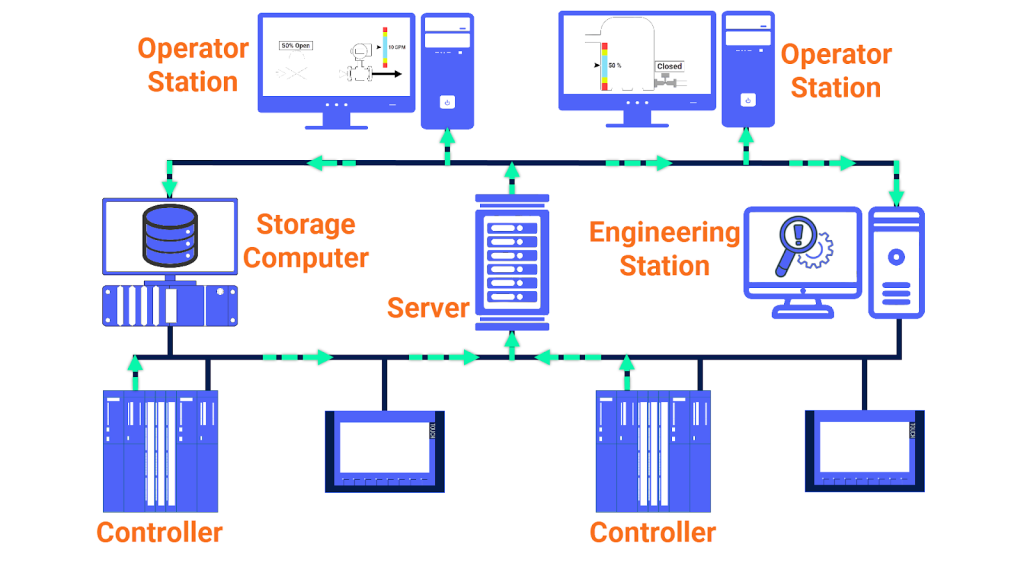
A typical SCADA system comprises several key components working in concert:

  1. Field Devices (Sensors and Actuators): These are the “eyes and hands” of the system, located at the remote sites.
    • Sensors: These devices measure physical parameters (e.g., temperature sensors, pressure transducers, flow meters) and convert them into electrical signals.
    • Actuators: These devices receive control signals from the SCADA system and perform actions on the physical process (e.g., valves, pumps, motors, circuit breakers).
  1. Remote Terminal Units (RTUs) / Programmable Logic Controllers (PLCs): These are intelligent electronic devices that act as intermediaries between the field devices and the central SCADA system.
    • RTUs: Typically used for geographically dispersed locations and often have communication capabilities suitable for wide-area networks. They gather data from connected sensors, perform local control functions, and transmit data to the central system.
    • PLCs: More commonly used for localized control within a plant or facility. They are robust, programmable controllers that can execute complex logic and communicate with the SCADA system. Modern systems often blur the lines between RTUs and PLCs, with both offering similar functionalities.
  1. Communication Network: This crucial component provides the pathway for data exchange between the RTUs/PLCs and the central SCADA system. The communication network can utilize various technologies, including:
    • Wired connections (e.g., Ethernet, fiber optic cables)
    • Wireless technologies (e.g., radio, cellular, satellite)
    • Industrial protocols (e.g., Modbus, DNP3, IEC 60870)

The choice of communication technology depends on factors like distance, bandwidth requirements, security considerations, and cost.

  1. Human-Machine Interface (HMI): This is the graphical user interface that allows human operators to interact with the SCADA system. The HMI provides a real-time visual representation of the entire process, displaying data, alarms, trends, and control options. Operators can use the HMI to monitor system performance, issue commands, and respond to alerts.
  2. SCADA Server (or Central Host): This is the central computer system that acts as the brain of the SCADA system. It receives data from the RTUs/PLCs, processes it, stores it in a database, and makes it available to the HMI and other authorized users. The SCADA server also handles control commands issued by operators and transmits them to the remote devices.

The Significance of SCADA: Why It Matters

SCADA systems are indispensable in a wide range of industries and infrastructure sectors due to the numerous benefits they offer:

  • Enhanced Efficiency: By automating control processes and providing real-time data, SCADA systems enable organizations to optimize their operations, reduce manual intervention, and improve overall efficiency.
  • Improved Safety: Continuous monitoring and automated responses to abnormal conditions help prevent accidents, equipment damage, and environmental incidents. Alarm systems alert operators to potential problems, allowing for timely intervention.
  • Increased Reliability: SCADA systems facilitate proactive maintenance by tracking equipment performance and identifying potential failures before they occur. This reduces downtime and ensures a more reliable operation.
  • Better Decision-Making: The wealth of real-time and historical data provided by SCADA systems empowers operators and managers to make informed decisions, optimize resource allocation, and improve overall performance.
  • Remote Monitoring and Control: The ability to monitor and control geographically dispersed assets from a central location significantly reduces the need for on-site personnel, saving time and costs.
  • Data Logging and Analysis: SCADA systems automatically log vast amounts of operational data, which can be analyzed to identify trends, optimize processes, and improve future operations.

Where Do We Find SCADA? A Glimpse into Applications

The reach of SCADA systems is far and wide, touching many aspects of our daily lives. Here are just a few key application areas:

  • Power Generation and Distribution: Monitoring and controlling power plants, substations, and transmission lines to ensure a stable and reliable electricity supply.
  • Water and Wastewater Management: Controlling water treatment plants, distribution networks, and wastewater collection systems to provide clean water and manage sewage effectively.
  • Oil and Gas: Monitoring and controlling pipelines, refineries, and offshore platforms for efficient and safe production and transportation.
  • Transportation: Managing traffic signals, railway systems, and airport operations for smooth and safe movement of people and goods.
  • Manufacturing: Automating and monitoring production lines, controlling machinery, and managing inventory in various industrial settings.
  • Building Automation: Controlling HVAC systems, lighting, security systems, and energy usage in large commercial and industrial buildings.

The Evolving Landscape: Challenges and Future Trends

While SCADA systems have proven to be incredibly valuable, they also face evolving challenges, particularly in the realm of cybersecurity. As these systems become increasingly interconnected and integrated with IT networks, they become more vulnerable to cyberattacks. Ensuring the security and resilience of SCADA systems is a critical concern for industries worldwide.

Looking ahead, several trends are shaping the future of SCADA:

  • Increased Integration with IoT (Internet of Things): The proliferation of connected devices offers new opportunities for data collection and control in industrial environments.
  • Cloud-Based SCADA: Utilizing cloud platforms for data storage, processing, and HMI delivery offers scalability, cost-effectiveness, and remote accessibility.
  • Advanced Analytics and AI: Integrating artificial intelligence and machine learning algorithms to analyze SCADA data for predictive maintenance, anomaly detection, and process optimization.
  • Enhanced Cybersecurity Measures: Implementing robust security protocols, intrusion detection systems, and encryption techniques to protect SCADA systems from cyber threats.

Conclusion: The Unsung Hero of Modern Infrastructure

SCADA systems, though often invisible to the average person, are the unsung heroes that underpin the smooth and efficient operation of countless critical infrastructures and industrial processes. From the water we drink to the electricity that powers our lives, SCADA plays a vital role in ensuring our comfort, safety, and productivity. Understanding the fundamental principles and components of these sophisticated systems provides valuable insight into the complex technological landscape that shapes our modern world. As technology continues to advance, SCADA systems will undoubtedly evolve further, playing an even more crucial role in managing the intricate web of our interconnected future.