
The Virtual Factory: What is a Digital Twin, and How Does It Save Money?
Imagine having a crystal ball on your factory floor. A tool that could tell you exactly when a critical pump is going to fail, show you how an asset would handle a 20% spike in production speed, or let you completely redesign your assembly line without touching a single physical bolt.
This isn’t science fiction or a distant Industry 4.0 dream. It is a reality happening right now through a technology known as the Digital Twin.
As industrial digitalization matures, digital twins have shifted from an expensive luxury used only by aerospace giants into a core financial strategy for mainstream manufacturers, logistics firms, and energy companies. Here is a deep dive into what a digital twin actually is, how the architecture works, and why it is saving companies millions of dollars.
What Exactly Is a Digital Twin?
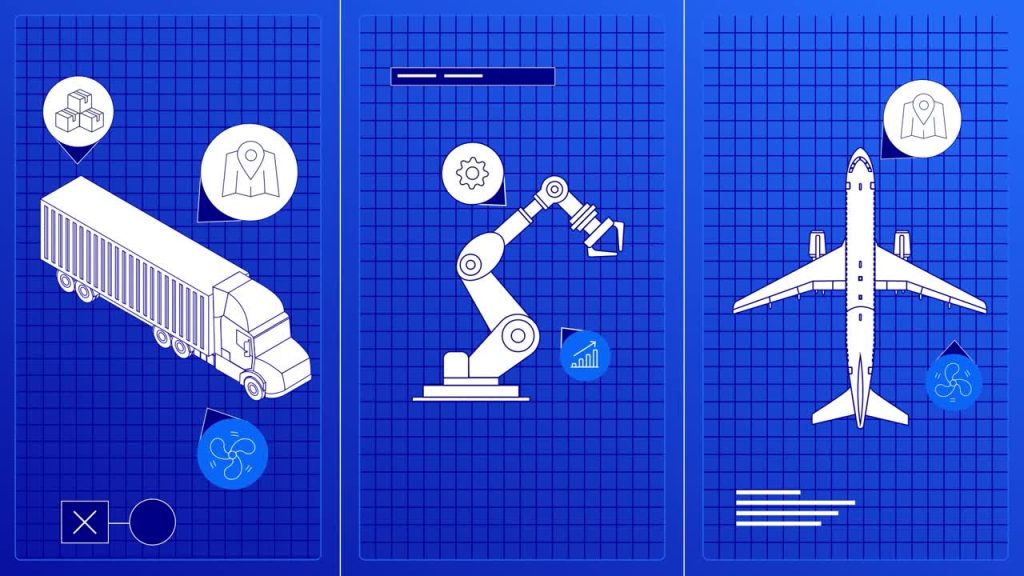
A digital twin is a highly accurate, virtual, real-time replica of a physical object, process, or entire operational ecosystem.
It is vital to understand that a digital twin is not just a 3D CAD drawing. A blueprint or standard 3D model is static; it shows what a machine should look like. A digital twin is dynamic; it shows how that machine is actually performing right this second.
How the Data Flow Works
A true digital twin relies on a continuous loop of data. The process typically moves through three distinct layers:
-
The Physical Layer (PLC & Sensors): Physical hardware—like factory machines, robotic arms, and IoT sensors—gather raw metrics like temperature, vibration, speed, and pressure.
-
The Processing Layer (Edge Computer & Cloud): This data is transmitted instantly via edge computing or gateway networks into the virtual model.
-
The User Layer (Insights & Dashboards): Advanced software, physics engines, and machine learning models process the data, giving operators an active, living simulation of the asset on their monitors or mobile devices.
4 Big Ways Digital Twins Save Massive Amounts of Money
Deploying a digital twin requires an upfront investment in software, sensors, and integration. However, the return on investment (ROI) is staggering because it directly addresses the costliest pain points in industrial operations.
1. Eliminating Unplanned Downtime (Predictive Maintenance)
In heavy industry, unexpected equipment failure is a financial catastrophe. According to industry studies, unplanned downtime costs manufacturers an estimated $50 billion annually.
A digital twin continuously compares a machine’s live telemetry against its ideal mathematical profile. If a bearing in a turbine begins vibrating just a fraction of a millimeter outside of its normal operating threshold, the digital twin catches it weeks before a human operator would notice.
The Savings: Instead of waiting for a machine to break and halting production for days while parts are shipped, managers can schedule a 30-minute repair window during an evening shift when production is already offline.
2. Accelerating R&D and “What-If” Prototyping
Historically, testing a new manufacturing layout or stress-testing a piece of hardware required building physical prototypes or halting active assembly lines to run trials. This is incredibly expensive and highly risky.
With a digital twin, engineers can conduct virtual “what-if” scenarios safely. Want to know what happens if you increase a conveyor line speed by 15%? Run it on the twin. Will it cause a bottleneck at the packaging station? The digital twin will simulate the exact physics and give you the answer instantly.
The Savings: You avoid purchasing unoptimized machinery and eliminate the scrap material, labor hours, and lost production time associated with physical trial-and-error testing.
3. Radical Optimization of Energy and Resources
Modern industrial facilities consume massive amounts of power, water, and raw materials. A digital twin of an entire plant can model energy consumption patterns across different shifts and production volumes.
By analyzing the data, the software can recommend minor tweaks—such as pre-heating a furnace slightly slower to utilize off-peak energy rates, or altering the cooling cycles on a production run.
The Savings: Even a 2% reduction in energy usage at a major chemical plant or automotive facility can translate into hundreds of thousands of dollars saved annually.
4. Seamless Remote Operations and Training
When an intricate machine breaks down, getting it back online often requires flying in a highly specialized field technician.
Because a digital twin accurately mirrors the physical asset in real-time, remote experts located anywhere in the world can open the virtual model, diagnose the exact internal mechanical failure, and guide on-site workers through the repair using augmented reality (AR) or direct instructions. Furthermore, new operators can train on the digital replica without any risk of damaging multi-million dollar physical equipment.
Summary: The Cost-Saving Breakdown
| Operational Pain Point | Traditional Costly Approach | The Digital Twin Approach | Financial Impact |
| Equipment Failure | Run-to-failure or rigid time schedules. | Real-time health monitoring and predictive alerts. | Eliminates catastrophic breakdown costs. |
| Process Changes | Physical line testing and shutdowns. | Virtual “what-if” testing and simulations. | Zero operational disruption during trials. |
| Worker Training | Risk of injury or equipment damage. | Immersive, risk-free training on a virtual model. | Lower liability and faster onboarding times. |
The Bottom Line
A digital twin isn’t just an engineering tool—it’s a financial shield. By turning invisible physical wear and operational bottlenecks into visible, actionable data, digital twins eliminate the guesswork that has plagued industrial operations for over a century. In an increasingly competitive global market, the digital twin is quickly becoming the ultimate weapon for protecting margins and maximizing efficiency.