
How Can a Warehouse Management System Improve Inventory Accuracy and Reduce Costs?
In today’s highly competitive business environment, efficient warehouse operations are essential for maintaining profitability, customer satisfaction, and operational excellence. As companies expand and customer expectations continue to rise, managing inventory manually or with outdated systems often leads to stock discrepancies, delayed deliveries, increased operational costs, and reduced productivity.
A Warehouse Management System (WMS) is a powerful software solution that helps businesses streamline warehouse operations, optimize inventory management, and improve overall supply chain performance. Whether you operate a manufacturing facility, distribution center, retail warehouse, or e-commerce fulfillment center, implementing a modern Warehouse Management System can significantly improve inventory accuracy while reducing operating costs.
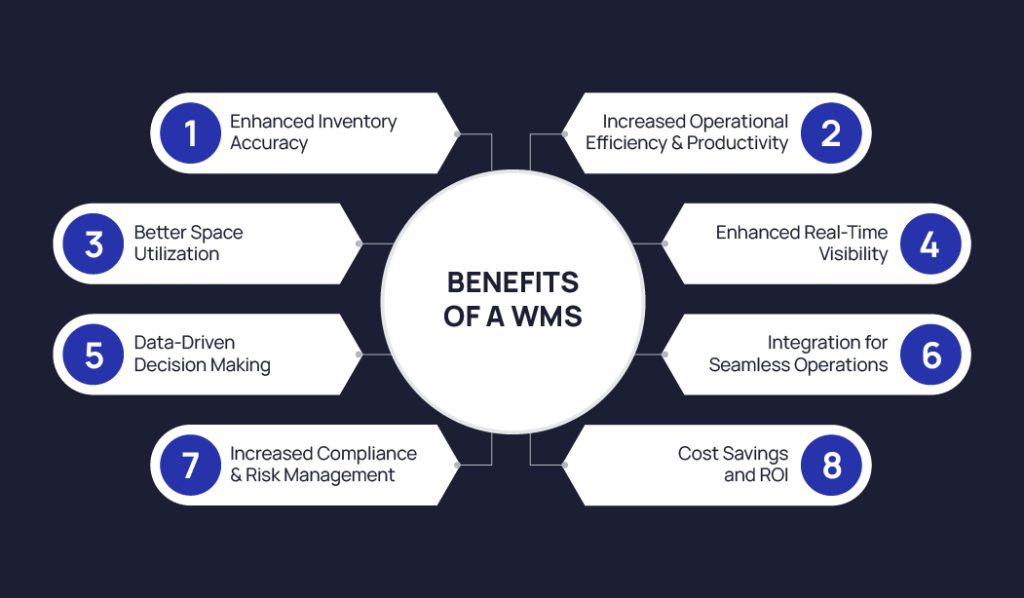
This article explores how a Warehouse Management System works, its key benefits, and why investing in a WMS is a smart decision for businesses looking to maximize efficiency and profitability.
What Is a Warehouse Management System?
A Warehouse Management System (WMS) is software designed to manage and optimize warehouse activities from the moment inventory enters the warehouse until it is shipped to customers.
A modern WMS provides complete visibility into inventory, helping businesses monitor stock levels, storage locations, inventory movement, order fulfillment, and warehouse performance in real time.
Typical warehouse operations managed by a WMS include:
- Inventory Receiving
- Put-away Management
- Storage Optimization
- Inventory Tracking
- Stock Transfers
- Order Picking
- Packing
- Shipping
- Cycle Counting
- Returns Management
- Warehouse Reporting
By automating these activities, businesses reduce manual work while improving accuracy and operational efficiency.
Why Inventory Accuracy Matters
Inventory accuracy refers to how closely the physical inventory in a warehouse matches the inventory recorded in the system.
Poor inventory accuracy can result in:
- Overstocking
- Stock shortages
- Lost inventory
- Delayed customer deliveries
- Increased labor costs
- Higher storage expenses
- Production interruptions
- Reduced customer satisfaction
Even a small inventory error can lead to significant financial losses, especially for businesses handling thousands of products.
A Warehouse Management System helps eliminate these issues through automation and real-time inventory updates.
How a Warehouse Management System Improves Inventory Accuracy
1. Real-Time Inventory Tracking
One of the biggest advantages of a Warehouse Management System is real-time inventory visibility.
Every inventory movement—including receiving, storage, picking, transfers, and shipping—is automatically updated in the system.
Warehouse managers always know:
- Current stock quantity
- Product location
- Inventory status
- Available stock
- Reserved inventory
- Incoming shipments
This minimizes inventory mismatches and improves planning.
2. Barcode and RFID Integration
Manual inventory entry is one of the primary causes of warehouse errors.
A WMS integrates with:
- Barcode Scanners
- RFID Readers
- Mobile Computers
- Handheld Devices
Every product movement is scanned instead of manually entered.
Benefits include:
- Faster inventory updates
- Elimination of typing errors
- Improved stock accuracy
- Reduced human intervention
3. Accurate Receiving Process
Receiving errors often create inventory discrepancies that affect the entire warehouse.
A Warehouse Management System verifies:
- Purchase Orders
- Product Quantity
- Product Identification
- Supplier Information
- Batch Numbers
- Serial Numbers
This ensures that only accurate inventory enters the warehouse.
4. Optimized Storage Management
A WMS automatically assigns the best storage location based on:
- Product type
- Weight
- Size
- Demand frequency
- Warehouse layout
This improves warehouse organization while reducing misplaced inventory.
Employees can quickly locate products without wasting time.
5. Cycle Counting Automation
Traditional annual stock counts often disrupt warehouse operations.
A Warehouse Management System supports continuous cycle counting.
Instead of counting the entire warehouse at once, inventory is verified in smaller batches throughout the year.
Advantages include:
- Higher inventory accuracy
- Reduced warehouse downtime
- Early error detection
- Better compliance
6. Automated Inventory Alerts
Modern WMS software automatically alerts users when:
- Inventory is running low
- Stock exceeds limits
- Products expire soon
- Slow-moving inventory increases
- Reorder points are reached
These alerts help businesses make informed inventory decisions before problems occur.
How a Warehouse Management System Reduces Costs
Reduced Labor Costs
Warehouse employees spend less time searching for products and updating inventory manually.
Automation allows staff to complete more work with fewer errors.
Benefits include:
- Faster picking
- Faster receiving
- Reduced paperwork
- Improved workforce productivity
Lower Inventory Holding Costs
Many businesses keep excess inventory due to inaccurate stock visibility.
With accurate inventory data, businesses can:
- Reduce excess inventory
- Optimize purchasing
- Lower warehouse storage costs
- Improve inventory turnover
Reduced Picking Errors
Order picking mistakes result in:
- Customer complaints
- Product returns
- Additional shipping costs
- Lost revenue
A Warehouse Management System guides employees through optimized picking routes while verifying each product using barcode scanning.
This dramatically improves order accuracy.
Lower Shipping Costs
A WMS optimizes packing and shipping processes by:
- Selecting the best shipping methods
- Consolidating shipments
- Reducing packaging waste
- Minimizing shipping errors
This lowers logistics costs while improving customer satisfaction.
Minimized Product Loss
Inventory losses often occur because of:
- Misplaced inventory
- Theft
- Damage
- Expired products
Real-time inventory tracking helps identify these issues quickly.
Businesses gain better inventory control and reduce unnecessary losses.
Better Warehouse Space Utilization
Warehouse space is expensive.
A Warehouse Management System analyzes storage utilization and recommends efficient product placement.
Benefits include:
- Better storage density
- Improved warehouse layout
- Reduced travel distance
- Increased warehouse capacity
Many businesses delay warehouse expansion simply by using available space more efficiently.
Additional Benefits of Warehouse Management System Solutions
Besides inventory accuracy and cost reduction, a WMS offers several strategic advantages:
Faster Order Fulfillment
Automated workflows accelerate order processing and shipping.
Improved Customer Satisfaction
Accurate deliveries and faster shipping increase customer trust and loyalty.
Better Decision-Making
Real-time dashboards and analytics provide insights into:
- Inventory performance
- Warehouse productivity
- Stock movement
- Order trends
- Labor efficiency
Managers can make informed decisions based on live operational data.
ERP and Automation Integration
A modern WMS integrates with:
- ERP Systems
- Manufacturing Execution Systems (MES)
- Barcode Systems
- RFID Solutions
- PLC & Industrial Automation Systems
- Transportation Management Systems (TMS)
This creates a connected, data-driven supply chain.
Scalability
As businesses grow, a Warehouse Management System can support:
- Multiple warehouses
- Additional users
- New product lines
- Increased order volumes
Without major operational changes.
Industries That Benefit from Warehouse Management Systems
A WMS is valuable across many sectors, including:
- Manufacturing
- Automotive
- Food & Beverage
- Pharmaceuticals
- FMCG
- Retail
- E-commerce
- Electronics
- Logistics & Distribution
- Chemicals
- Textile Industry
Any organization that stores, moves, or distributes inventory can benefit from improved warehouse visibility and control.
Choosing the Right Warehouse Management System
When selecting a WMS, consider the following:
- Real-time inventory visibility
- Barcode and RFID support
- Cloud or on-premise deployment
- ERP integration
- User-friendly interface
- Mobile accessibility
- Reporting and analytics
- Scalability
- Technical support
- Customization options
Choosing a solution that aligns with your current operations and future growth plans will maximize long-term value.
Conclusion
A Warehouse Management System is more than just inventory software—it is a strategic tool that transforms warehouse operations. By automating inventory tracking, optimizing storage, reducing manual errors, and streamlining order fulfillment, a WMS enables businesses to achieve higher inventory accuracy while significantly lowering operational costs.
Organizations that invest in a modern Warehouse Management System gain improved visibility, greater efficiency, faster deliveries, and better control over their supply chain. Whether you’re managing a single warehouse or multiple distribution centers, implementing the right WMS can help you reduce waste, increase productivity, and strengthen customer satisfaction.
If your business is looking to improve inventory accuracy, optimize warehouse performance, and reduce operational expenses, now is the ideal time to adopt a Warehouse Management System that supports your long-term growth and digital transformation goals.