What is Industry 4.0, and how does it differ from the Third Industrial Revolution?

From Automation to Autonomy: Understanding Industry 4.0

The world of manufacturing has undergone several seismic shifts over the last three centuries. We’ve moved from steam engines to assembly lines, and from early computers to the hyper-connected world of today.

Currently, we are in the midst of Industry 4.0, often called the Fourth Industrial Revolution. But what exactly does that mean, and how does it differ from the “Digital Revolution” (Industry 3.0) that many of us grew up with?

What is Industry 4.0?

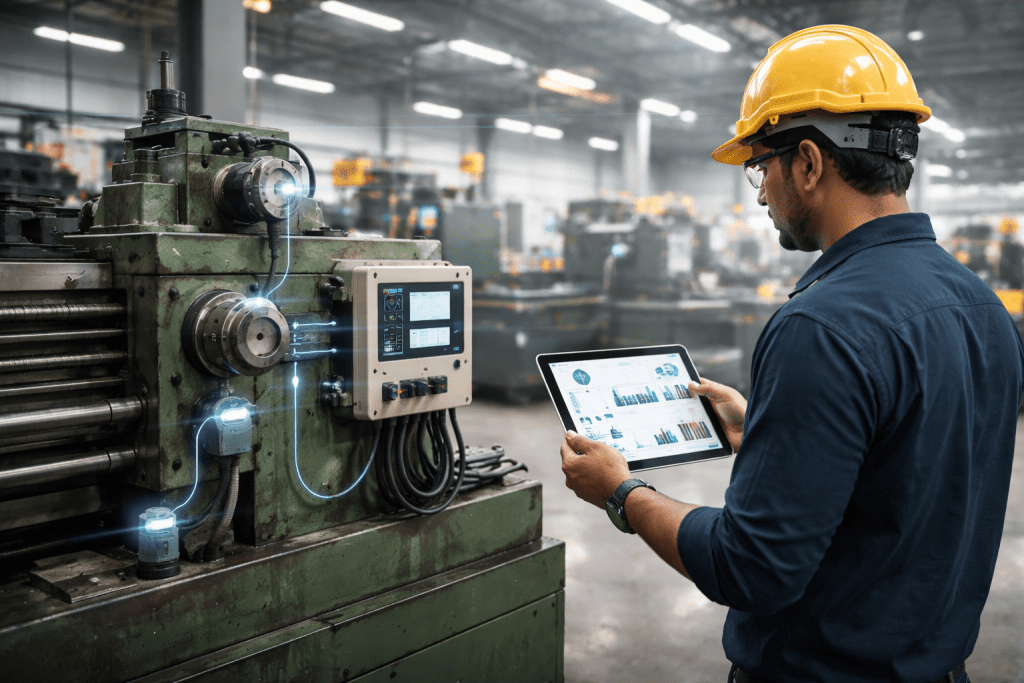
At its core, Industry 4.0 is the integration of intelligent digital technologies into manufacturing and industrial processes. It isn’t just about using computers; it’s about computers and machines communicating with each other to make decisions without human intervention.


This era is defined by several “pillars” of technology, including:

  • The Industrial Internet of Things (IIoT): Sensors on machines that collect and share data in real-time.

  • Big Data and Analytics: Processing massive amounts of information to find patterns.

  • Cyber-Physical Systems (CPS): Systems where physical mechanisms are controlled by computer-based algorithms.

  • Digital Twins: Virtual replicas of physical assets used for testing and simulation.

Industry 3.0 vs. Industry 4.0: The Key Differences

To understand the leap we’ve taken, we need to look back at Industry 3.0, which began in the late 20th century. While both involve computers, the philosophy behind them is fundamentally different.

1. Automation vs. Autonomy

  • Industry 3.0 (Automation): This era was about using Programmable Logic Controllers (PLCs) and IT to automate repetitive tasks. A machine could follow a set of instructions perfectly, but it still required a human to “tell” it what to do and when to stop.

  • Industry 4.0 (Autonomy): Systems are now autonomous. They don’t just follow instructions; they use Artificial Intelligence (AI) to analyze data and adjust their own behavior. If a sensor detects a part is wearing out, the machine can slow itself down or order a replacement part automatically.

2. Isolated Systems vs. Interconnectivity

  • Industry 3.0: Factories were often made up of “islands of automation.” One machine did its job, but it didn’t necessarily know what the machine next to it was doing. Data stayed in local servers (silos).

  • Industry 4.0: Everything is connected. Data flows across the entire supply chain—from the raw material supplier to the factory floor, and all the way to the end customer. This is called Horizontal and Vertical Integration.

3. Reactive vs. Predictive Maintenance

  • Industry 3.0: Maintenance happened either on a fixed schedule (preventive) or when something broke (reactive).

  • Industry 4.0: We use Predictive Maintenance. By analyzing vibrations and heat signatures via IoT sensors, AI can predict exactly when a machine will fail before it happens, saving millions in downtime.

Why the Shift Matters

The transition from Industry 3.0 to 4.0 isn’t just a technical upgrade; it’s a business necessity.

Feature Industry 3.0 Industry 4.0
Primary Driver Logic & Computers Data & Connectivity
Production Model Mass Production Mass Customization
Data Usage For Record Keeping For Real-time Decisions
Human Role Controlling the machine Collaborating with the system

The Result: Mass Customization

In Industry 3.0, the goal was to make 10,000 of the exact same item as cheaply as possible. In Industry 4.0, a smart factory can produce 10,000 unique items at the same cost as mass production, because the machines can reconfigure themselves on the fly based on digital orders.

Conclusion

Industry 3.0 gave us the “digital tools,” but Industry 4.0 is teaching those tools how to work together. While the Third Industrial Revolution automated our manual labor, the Fourth is automating our decision-making.

What role does AI and machine learning play in PPE detection?

Personal Protective Equipment (PPE) is the final line of defense between a worker and a workplace hazard. Yet, despite its importance, manual monitoring is notoriously difficult. Safety officers cannot be everywhere at once, and human fatigue often leads to oversight.

In 2026, the integration of Artificial Intelligence (AI) and Machine Learning (ML) has revolutionized this landscape, moving safety protocols from reactive “after-the-fact” reporting to proactive, real-time prevention.

ppe detection

How AI and Machine Learning Detect PPE

At its core, AI-powered PPE detection relies on Computer Vision (CV), a field of AI that enables computers to “see” and interpret visual data from cameras.

1. The Neural Network Foundation

Modern systems use deep learning architectures, specifically Convolutional Neural Networks (CNNs). These models are trained on millions of annotated images—workers wearing hard hats correctly, workers wearing them incorrectly, and workers not wearing them at all.

2. Real-Time Object Detection

Algorithms like YOLO (You Only Look Once) or SSD (Single Shot Detector) allow the system to identify multiple items in a single frame within milliseconds.

  • The Process: The AI scans a video feed, draws “bounding boxes” around individuals, and then checks for sub-objects like helmets, vests, or gloves.

  • Contextual Awareness: Advanced AI in 2026 doesn’t just look for a helmet; it understands where the worker is. If a worker is in a “Green Zone” (breakroom), no alert is triggered. If they step into a “Red Zone” (loading dock) without a vest, the system reacts instantly.

Key Roles of AI in the PPE Ecosystem

Continuous 24/7 Surveillance

Unlike human supervisors who work in shifts, AI doesn’t get tired or blink. It provides 100% coverage across vast construction sites or complex manufacturing floors, ensuring that safety standards are upheld at 3:00 AM just as strictly as at 10:00 AM.

Precision and Accuracy

Traditional motion sensors struggle with “noise” (moving machinery or shadows). Machine learning models are trained to differentiate between a yellow bucket and a yellow safety helmet, or a worker carrying a vest versus actually wearing it.

Instantaneous Alerting Systems

When a violation is detected, the AI triggers a workflow:

  • On-site Alerts: Audio warnings via floor speakers or visual cues on digital signage.

  • Management Notifications: Instant push notifications to safety supervisors via mobile apps or platforms like MS Teams and WhatsApp.

  • Access Control: Integrating with smart locks or turnstiles to physically prevent a worker from entering a hazardous zone until the required gear is detected.

Predictive Analytics & Behavioral Insights

Beyond “catching” people, ML identifies patterns. If the data shows that PPE violations spike on Friday afternoons in the welding department, management can intervene with targeted training or investigate if the equipment provided is too uncomfortable for long shifts.

Challenges and The Path Forward

While powerful, AI PPE detection faces hurdles like occlusions (workers blocked by machinery) and low-light conditions. However, the shift toward Edge Computing—where the AI processes data locally on the camera itself—is reducing latency and solving privacy concerns by ensuring video data doesn’t always need to leave the site.

In 2026, the goal is no longer just “compliance.” It is the creation of a “Safety-First Culture” where AI acts as a supportive partner, freeing safety professionals to focus on high-level strategy while the machine handles the tireless watch

Can PPE detection reduce workplace accidents?

The Prevention Revolution: Can PPE Detection Truly Reduce Workplace Accidents?

In high-risk industries like construction, oil and gas, and manufacturing, “safety first” is a slogan painted on every wall. Yet, despite the presence of high-tech gear and rigorous training, the International Labor Organization (ILO) reports approximately 60 million accidents annually due to negligence in using Personal Protective Equipment (PPE).

The question isn’t whether PPE works—we know it does. The question is: Can we ensure it is actually worn? Recent data from 2025 and 2026 suggests that AI-powered PPE detection is no longer just a trend; it is a life-saving necessity that is slashing accident rates by up to 70%.

ppe detection

The Anatomy of an Accident: Why Manual Monitoring Fails

Before we look at the solution, we must understand the “Safety Gap.” On a busy site, a safety officer cannot be everywhere at once.

  • Human Inconsistency: Supervisors get distracted, fatigued, or may have “blind spots” in large facilities.

  • The “Observer Effect”: Workers often don’t their gear the moment they see a supervisor approaching, only to remove it once the “threat” of a write-up passes.

  • Reactive vs. Proactive: Traditional safety audits happen after a shift or after an accident. They tell you what went wrong, but they don’t stop the injury in progress.

How PPE Detection Acts as a “Digital Guardian”

PPE detection uses Computer Vision (CV)—a branch of AI that allows cameras to “see” and interpret the world. By integrating with existing CCTV, these systems perform a continuous, three-step safety check:

  1. Identification: The AI identifies a human shape in a designated hazard zone.

  2. Verification: It scans for specific pixels representing a hard hat, high-vis vest, gloves, or safety glasses.

  3. Action: If a piece of gear is missing, the system triggers an immediate response—whether that’s an audible alarm, a notification to a supervisor, or even locking an automated gate to prevent entry.

Proven Impact: The Statistics of 2026

The transition from manual checks to AI-driven monitoring has yielded staggering results across various sectors:

Industry Impact of PPE Detection Key Outcome
Power Plants 89% Reduction in safety alerts Proactive detection stopped violations before they escalated.
Construction 70% Fewer Falls Automated harness and helmet checks ensured 24/7 compliance.
Manufacturing 95% Compliance Rate AI-driven verification reached near-perfect adherence levels.
Food Processing 100% Mask Compliance Eliminated hygiene-related contamination risks.

Beyond Just “Wearing the Gear”

Reducing accidents isn’t just about spotting a missing helmet. Modern systems in 2026 have evolved to detect Safety Behavior:

  • Zonal Awareness: Detecting if a worker is wearing the correct class of PPE for a specific high-risk zone (e.g., specialized gloves for chemical handling vs. standard work gloves).

  • Equipment Integrity: Advanced models can now spot a cracked hard hat or a frayed safety vest that has lost its reflective properties.

  • Fatigue & Posture: By analyzing body mechanics, AI can predict if a worker is too tired to operate machinery safely, preventing accidents caused by human exhaustion.

The ROI of a Safer Workplace

Critics often point to the initial cost of AI implementation. However, the 2026 market data shows that the Return on Investment (ROI) is rapid:

  • Lower Insurance: Companies using automated PPE detection are seeing significant discounts on premiums due to “demonstrable risk mitigation.”

  • Avoided Penalties: In the US, OSHA fines for “willful violations” can exceed $160,000 per instance. Automated logs prove a company’s commitment to safety, often mitigating these legal risks.

  • Uptime: Fewer accidents mean fewer shutdowns. A single major accident can halt production for days; AI detection keeps the line moving safely.

Conclusion: A Cultural Shift

Can PPE detection reduce workplace accidents? The evidence is a resounding yes. By removing the element of human error and providing a “Safety-as-a-Service” layer that never sleeps, industries are moving toward the goal of Zero Harm.

This isn’t about surveillance; it’s about making sure that every worker who clocks in also clocks out—safe, sound, and whole.

Why is PPE detection important in industrial safety?

The Silent Sentinel: Why PPE Detection is the Future of Industrial Safety

In the high-stakes environment of a factory floor, a construction site, or a chemical plant, the line between a routine shift and a life-altering accident is often just a few millimeters thick. That thickness belongs to Personal Protective Equipment (PPE).

Despite rigorous training and strict protocols, human error remains a constant variable. This is where Automated PPE Detection—powered by AI and computer vision—steps in. It isn’t just a “nice-to-have” tech upgrade; it’s becoming the backbone of modern industrial health and safety (EHS) strategies.

The Reality of the “Safety Gap”

We’ve all seen it: a worker removes their helmet for a moment to wipe sweat, or a technician forgets their safety glasses because they’re “just doing a quick check.” These micro-moments of non-compliance create a Safety Gap.

Traditional safety audits are periodic and manual—like taking a polaroid of a moving train. PPE detection systems, however, provide a continuous video stream of data, ensuring that safety is maintained every second of every shift.

ppe detection
PPE Detection

Why PPE Detection is Non-Negotiable

1. Real-Time Risk Mitigation

The primary goal of PPE detection is prevention. When a system identifies a worker entering a hazardous zone without a high-visibility vest or a hard hat, it can trigger instant alerts.

  • Immediate Feedback: Audio visual alarms can notify the worker instantly.

  • Proactive Intervention: Supervisors receive mobile alerts to address the issue before an incident occurs.

2. Data-Driven Safety Culture

You can’t manage what you don’t measure. PPE detection transforms “safety” from a feeling into quantifiable data.

  • Trend Analysis: Are workers consistently forgetting gloves on Tuesdays? Is there a specific zone where compliance drops?

  • Targeted Training: Instead of lecturing the whole team, EHS managers can provide specific coaching to individuals or departments where the data shows a lapse.

3. Enhancing Operational Efficiency

It sounds counterintuitive, but better safety leads to better speed.

  • Reduced Downtime: Every accident leads to an immediate halt in production, investigations, and potential equipment damage.

  • Lower Insurance Premiums: Demonstrating a tech-forward approach to safety often allows companies to negotiate better rates with insurers who value lower risk profiles.

4. Regulatory Compliance and Liability

In many jurisdictions, “I didn’t know they weren’t wearing it” is not a valid legal defense.

  • OSHA/HSE Standards: Automated logs provide an audit trail showing that the company took every possible step to enforce safety standards.

  • Legal Protection: In the event of a claim, having timestamped evidence of safety protocols helps protect the organization from negligence charges.

How the Technology Works

Modern PPE detection utilizes Deep Learning models trained on thousands of images of safety gear. These models are integrated with existing CCTV infrastructure to monitor:

  • Head Protection: Hard hats and helmets.

  • Eye & Face: Safety goggles and face shields.

  • Body: High-visibility vests and hazmat suits.

  • Extremities: Gloves and steel-toed boots.

Beyond the “Big Brother” Stigma

One hurdle in implementing this tech is the “surveillance” feel. However, the most successful implementations focus on safety, not punishment. When framed as a “digital guardian” that ensures everyone goes home to their families at night, worker buy-in increases significantly.

Summary Table: Manual vs. Automated Safety

Feature Manual Audits AI PPE Detection
Frequency Periodic / Random 24/7 Continuous
Response Time Delayed (Post-audit) Real-time (Instant)
Data Accuracy Subjective / Human Error Objective / Data-driven
Cost over time High (Labor intensive) Low (Scalable)

The Bottom Line

In the industrial world, equipment can be replaced, and deadlines can be pushed. Human life cannot. PPE detection is the bridge between safety policy and safety reality. By leveraging AI to watch over the workforce, companies aren’t just checking a box—they are building a culture of care.

Can PPE detection systems work in real time?

Can PPE Detection Systems Work in Real Time? The Future of Workplace Safety

In the high-stakes environments of construction, manufacturing, and oil and gas, “safety first” isn’t just a slogan—it’s a logistical challenge. Traditionally, ensuring that every worker is wearing their hard hat, high-visibility vest, and safety glasses has relied on manual inspections. But human eyes can’t be everywhere at once.
This brings us to a critical question for 2026: Can PPE (Personal Protective Equipment) detection systems actually work in real time?
The short answer is yes. Thanks to the convergence of advanced Computer Vision, Edge AI, and high-speed connectivity, real-time PPE monitoring is no longer a “future tech” concept—it is a deployed reality.

How Real-Time PPE Detection Works
Real-time detection isn’t just about recording video; it’s about instantaneous perception. The system uses a specialized branch of Artificial Intelligence called Computer Vision to “see” and interpret the environment.
The Technical Pipeline
1. Capture: Standard IP or CCTV cameras feed live video streams into the system.
2. Pre-processing: The system optimizes the frames, correcting for low light or motion blur.
3. Inference (The “AI” Moment): Deep learning models, such as YOLO (You Only Look Once) or SSD (Single Shot Detector), analyze the frame. Unlike older models that scanned an image multiple times, YOLO can identify humans and their gear in a single pass, often in less than 50 milliseconds.
4. Action: If a violation is detected (e.g., a worker enters a zone without a helmet), an alert is triggered immediately.

Key Benefits of Real-Time Monitoring
Moving from reactive (checking footage after an accident) to proactive (preventing the accident) changes the entire safety culture of a worksite.
• Instant Intervention: Supervisors receive mobile push notifications or SMS alerts immediately, allowing them to stop a dangerous task before an injury occurs.
• Automated Access Control: Some systems integrate with physical gates. If the AI doesn’t detect a hard hat and vest, the turnstile simply won’t open.
• Heatmaps and Hotspots: By tracking where violations occur most frequently, safety officers can identify “danger zones” that may need better signage or engineering controls.
• Night Vision & Harsh Conditions: Modern systems use IR (Infrared) and thermal imaging to detect PPE in rain, fog, or total darkness—conditions where human supervisors struggle.

The Challenges (and How We’re Solving Them)
While the tech is powerful, it isn’t magic. Real-world environments are messy.
• Occlusion: If a worker is standing behind a pallet, the camera might not see their boots. Solution: 2026 systems use multi-angle camera fusion to “stitch” together a 360-degree view of the worker.
• False Positives: A yellow t-shirt shouldn’t be mistaken for a safety vest. Solution: Modern models are trained on massive datasets (like the SH17 dataset) that include millions of variations in clothing, lighting, and angles to ensure accuracy rates often exceeding 95%.
• Privacy Concerns: Workers often feel “watched.” Solution: Many Edge AI systems offer “Privacy by Design,” where the video is processed and deleted instantly, only saving a blurred snapshot if a violation occurs.

Conclusion: A New Standard for 2026
In 2026, the question is no longer if these systems work, but how fast you can implement them. Real-time PPE detection transforms your existing CCTV cameras from passive observers into active digital guardians. It reduces insurance premiums, ensures OSHA/HSE compliance, and—most importantly—it saves lives.
“The goal of AI in safety isn’t to replace the safety officer, but to give them a thousand sets of eyes that never blink.”