
Navigating the Digital Transformation: Overcoming the Challenges of Full-Scale Predictive Maintenance
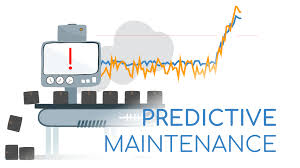
Predictive Maintenance (PdM) promises a world of reduced unplanned downtime, lower costs, and maximized asset life—a true Industry 4.0 dream. However, the path from a successful pilot project to a full-scale, integrated PdM model is often littered with significant hurdles. For industrial organizations, transitioning to this data-driven strategy requires more than just buying sensors; it demands a fundamental shift in technology, personnel, and culture.
Here are the biggest challenges organizations face when scaling PdM and the strategic solutions needed to overcome them.
Challenge 1: The Data Dilemma—Quality, Quantity, and Integration
The foundation of PdM is data. If the data is flawed, the prediction is useless. Many organizations stumble over the sheer complexity of industrial data landscapes.
The Hurdles:
- Data Silos and Fragmentation: Operational Technology (OT) data from sensors, maintenance records from the Computerized Maintenance Management System (CMMS), and business metrics from the Enterprise Resource Planning (ERP) system often reside in disconnected systems. This makes creating a unified, holistic view of asset health nearly impossible.
- Legacy Equipment and Sensor Gaps: Older, critical machinery was not designed with data collection in mind. Retrofitting these assets can be complex and expensive, leading to incomplete sensor coverage.
- Insufficient Failure Data: Machine Learning (ML) models need examples of failure to learn. If a company has a great preventive maintenance program, failures might be rare, meaning the model lacks the necessary historical data to accurately predict them.
- Data Quality Issues: Sensor drift, communication errors, and manual data entry mistakes create “noise” that can lead to false positives (wasting time) or false negatives (risking a catastrophic failure).
Overcoming Strategies:
- Implement a Unified IIoT Architecture: Invest in a middleware or Industrial IoT platform that can ingest and normalize data from disparate sources (OT and IT). This breaks down silos and ensures data is standardized for the analytics engine.
- Prioritize Asset Criticality: Instead of “sensorizing” everything at once, focus the initial full-scale deployment on the most critical, high-risk assets (those with the highest cost of downtime). This allows for a phased approach and maximizes early ROI.
- Synthetic Failure Data and Anomaly Detection: When historical failure data is scarce, employ unsupervised ML techniques (like anomaly detection) that establish a baseline for “normal” operation. Additionally, leverage Failure Modes and Effects Analysis (FMEA) to simulate potential failure trajectories and feed this synthetic data into models for training.
- Robust Data Cleansing Protocols: Implement automated data validation and cleansing tools at the edge (where data is collected) and in the cloud/server to filter out noise, flag outliers, and ensure high data integrity.
Challenge 2: The Skills Gap and Organizational Resistance
Technology is only as good as the people who use it. The shift to PdM introduces new job roles and fundamentally changes the daily workflow of maintenance teams, often leading to internal friction.
The Hurdles:
- Lack of Specialized Talent: PdM requires a unique combination of skills: data scientists to build and refine the ML models, data engineers to manage the data pipeline, and vibration analysts/technical experts who can interpret the model’s output in a mechanical context. This talent is scarce.
- Resistance from Maintenance Technicians: Experienced technicians often view the “black box” of AI with skepticism, feeling that the new system devalues their years of expertise. They may resist adopting new procedures or following the model’s recommendations, leading to poor system utilization.
- Siloed Team Structure: PdM requires unprecedented collaboration between Maintenance (OT), IT, and Operations. Traditional organizational structures often have deep, uncooperative divides between these groups.
Overcoming Strategies:
- Strategic Upskilling and Training: Focus on “data literacy” across the board. Train existing maintenance staff not to become data scientists, but to be effective interpreters and users of the PdM system. Certifications in condition monitoring and targeted training on the new software are essential.
- Hire for Bridging Roles: Invest in Reliability Engineers or Data Translators who can speak both the language of the machine floor and the data science team, turning complex model outputs into clear, actionable work orders.
- Effective Change Management (The Crucial Step): Involve the end-users early. Run joint workshops where technicians, IT, and data teams collaborate on model validation. Emphasize that PdM is a tool to augment, not replace, their experience, allowing them to focus on complex, rewarding work instead of routine checks. Celebrate “saved” breakdowns as wins for the team.
Challenge 3: Financial Justification and Scaling Uncertainty
The high upfront costs of sensors, software, and infrastructure often make securing executive approval a significant hurdle, especially when the Return on Investment (ROI) is perceived as taking a long time to materialize.
The Hurdles:
- High Initial Capital Expenditure: The collective cost of outfitting thousands of machines with new sensors, implementing cloud storage, and licensing advanced analytics software is substantial.
- ROI Proving Period: The major cost savings from PdM—like reducing catastrophic failure costs—only become visible over years, making it difficult to justify the investment using standard quarterly financial metrics.
- Pilot-to-Scale Failure: Many successful proof-of-concept (PoC) projects fail when attempting to scale. The PoC may have focused on one simple, homogenous machine type, but scaling to the plant’s full diversity introduces compatibility and integration nightmares that derail the budget.
Overcoming Strategies:
- Focus on High-Value Pilots: Only run pilots on assets where the cost of a single hour of unplanned downtime is extremely high. This immediately creates a compelling financial case for expansion.
- The Total Cost of Ownership (TCO) Model: Frame the ROI not just in maintenance savings, but in Total Cost of Ownership (TCO). Highlight the value of:
- Reduced Over-Maintenance: Eliminating unnecessary, calendar-based tasks.
- Inventory Optimization: Decreased need for expensive, emergency spare parts inventory.
- Revenue Protection: Quantifying the revenue saved by avoiding downtime.
- Phased, Modular Deployment: Avoid a single, massive roll-out. Implement PdM in manageable, funded phases (e.g., Phase 1: Critical Pumps and Compressors; Phase 2: Conveyor Systems; etc.). This allows for continuous learning, adjustment of the budget, and demonstration of incremental ROI along the way.
Challenge 4: Cybersecurity and Data Governance
As PdM integrates the physical world (OT) with the digital world (IT), it creates a larger, more complex attack surface that must be secured.
The Hurdles:
- OT/IT Security Convergence: OT networks were historically air-gapped and secured by obscurity. Connecting them to the internet or cloud for PdM analytics exposes them to new cyber threats that can affect physical operations.
- Data Privacy and Ownership: Questions arise about who owns the asset performance data, especially when dealing with third-party vendors or cloud services. This requires clear contracts and governance.
Overcoming Strategies:
- Implement Network Segmentation: Isolate the network segment where sensors and edge devices reside from the main IT corporate network. Use a DMZ (Demilitarized Zone) for data transfer to prevent a breach in one area from spreading to critical control systems.
- End-to-End Encryption: Ensure all data is encrypted both in transit (from the sensor to the server) and at rest (in the database) to protect sensitive operational information.
- Clear Governance and Compliance: Establish strict data access controls and protocols. Ensure compliance with relevant industry and national data protection regulations (e.g., GDPR, NIS 2) from the outset of the project.
Conclusion: A Marathon, Not a Sprint
Transitioning to a full-scale Predictive Maintenance model is a massive undertaking—it is a digital transformation initiative disguised as a maintenance project. Success hinges on a balanced attack that addresses the technical challenges of data integration and the human challenges of change management and skills development.
By adopting a phased approach, prioritizing early ROI, investing in workforce upskilling, and treating cybersecurity as a core component, organizations can successfully navigate these hurdles and fully realize the immense competitive advantage that a truly predictive operation provides.