
The Great Connection Crisis: Why Interoperability is Industry 4.0’s Biggest Hurdle
The vision of Industry 4.0 is a beautiful, synchronized dance: machines talking to software, robots coordinating with logistics, and sensors feeding AI—all in perfect harmony. But as many manufacturers in 2026 have discovered, the reality is often more of a digital “Tower of Babel.”
While the technology to build a smart factory exists, getting those technologies to work together is a different story. Interoperability—the ability of different systems, devices, and applications to connect and communicate seamlessly—remains the “final boss” of digital transformation.
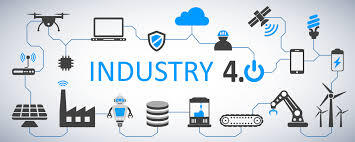
1. The Legacy Debt: Ancient Machines in a Modern World
The average manufacturing plant isn’t built from scratch every year. Most facilities are a “patchwork quilt” of equipment spanning decades.
-
The Conflict: You might have a cutting-edge 2026 robotic arm trying to share data with a CNC machine installed in 2005. The older machine likely uses proprietary protocols or analog signals that the modern “smart” system cannot interpret.
-
The Cost: To achieve interoperability, companies must often invest in expensive gateways or middleware to translate old data into a language the cloud can understand.
2. The “Protocol Jungle” and Lack of Standards
In the early days of automation, vendors (like Siemens, Rockwell, or Fanuc) built “walled gardens.” They created their own languages and communication protocols to keep customers within their ecosystem.
Today, we have a dizzying array of standards:
-
OPC UA (Open Platform Communications Unified Architecture)
-
MQTT (Message Queuing Telemetry Transport)
-
Modbus, Profibus, and EtherNet/IP
The Challenge: Even with “open” standards, different vendors implement them in slightly different ways. This lack of a universal “plug-and-play” standard means that every new piece of equipment requires a custom integration project, draining time and budget.
3. Data Silos: IT vs. OT
Interoperability isn’t just about hardware; it’s about the cultural and technical divide between Information Technology (IT) and Operational Technology (OT).
-
IT (The Office): Focuses on data security, software, and high-level analytics (ERPs, CRMs).
-
OT (The Floor): Focuses on uptime, safety, and real-time control (PLCs, SCADA systems).
Traditionally, these two worlds didn’t speak to each other. In an Industry 4.0 environment, the ERP needs to know the exact status of a machine on the floor to schedule orders. Bridging this gap requires a total overhaul of network architecture, which often leads to security vulnerabilities and data “bottlenecks.”
4. The Complexity of “Semantic Interoperability”
It’s one thing for two machines to exchange data (syntactic interoperability); it’s another for them to understand what that data means (semantic interoperability).
The Example: One sensor might report temperature in Celsius, while another reports it in Kelvin. Without a standardized “data model” that defines the context of the information, the AI analyzing the data will produce flawed insights.
In 2026, manufacturers are struggling to normalize data across thousands of sensors so that the “Digital Twin” actually reflects reality.
5. Security vs. Connectivity
The more you connect, the more you expose. Interoperability requires opening up previously isolated “air-gapped” machines to the internet.
-
The Paradox: To get the benefits of Industry 4.0, you must make your factory transparent. However, every point of interoperability is a potential entry point for a cyberattack.
-
The Result: Many companies slow down their implementation out of fear, creating “semi-smart” factories where data is trapped in small, secure pockets rather than flowing freely.