In 2026, the industrial landscape has moved far beyond simple mechanical automation. We are now in the era of “Intelligent Industry,” where data is the most valuable raw material on the factory floor. At the heart of this revolution is the SCADA solution.
But what exactly does a modern SCADA solution look like today, and why is it considered the central nervous system of industrial automation? This post explores the architecture, the evolution, and the future of SCADA.
What is a SCADA Solution?
SCADA stands for Supervisory Control and Data Acquisition. In its simplest form, a SCADA solution is a category of software and hardware elements that allow industrial organizations to:
- Control industrial processes locally or at remote locations.
- Monitor, gather, and process real-time data.
- Interact with devices such as sensors, valves, pumps, and motors through Human-Machine Interface (HMI) software.
- Record events into a log file or database for future analysis.
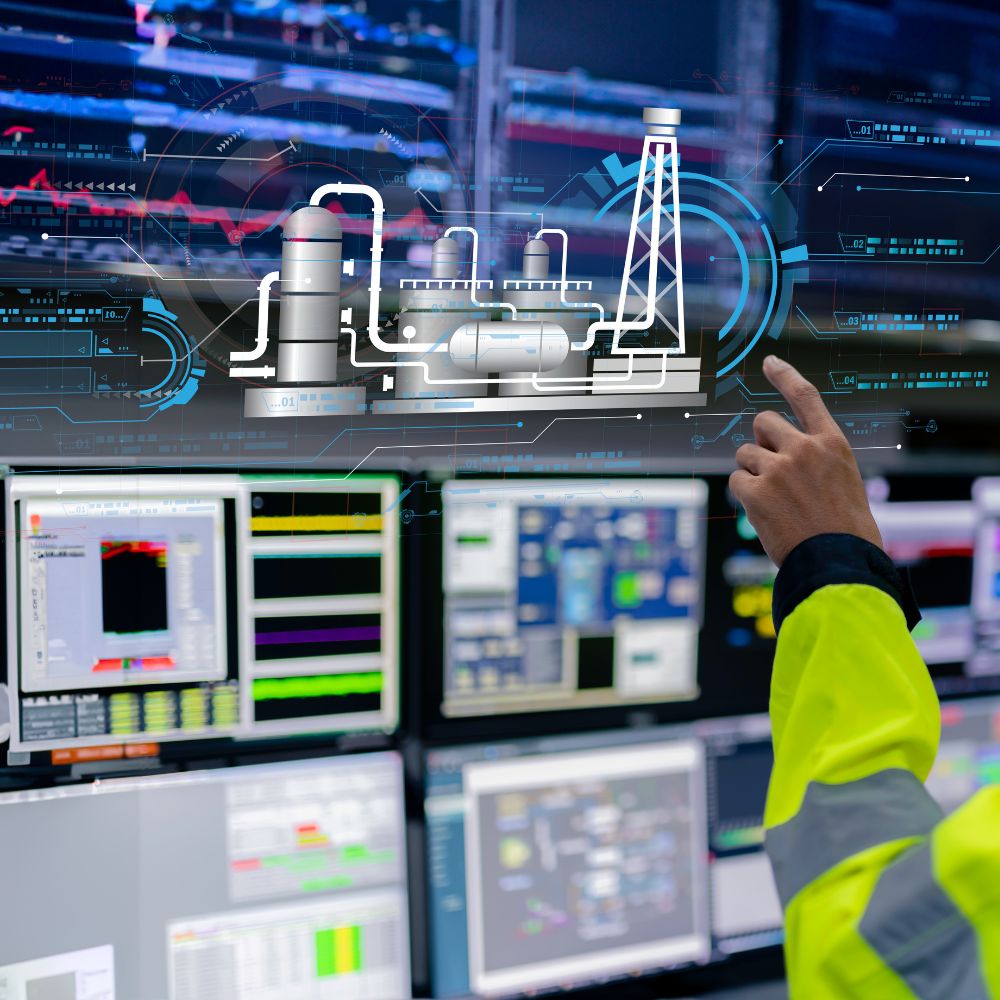
In 2026, a SCADA solution is no longer just a “screen in a control room.” It is a distributed ecosystem that connects the physical world of heavy machinery to the digital world of high-level analytics.
The Components of a Modern SCADA Solution
To understand how SCADA drives automation, we must look at the layers that make up the system:
- Field Instrumentation: These are the sensors (thermometers, flow meters) and actuators (switches, motors) that physically interact with the process.
- Remote Terminal Units (RTUs) & Programmable Logic Controllers (PLCs): These are the “local brains.” They receive signals from sensors and convert them into digital data. In 2026, many of these are “Smart PLCs” with built-in edge computing capabilities.
- The SCADA Master Station: This is the central server that gathers data from the field devices and provides the processing power for the entire system.
- HMI (Human-Machine Interface): The visual dashboard where operators see the status of the plant. Modern HMIs are now accessible via tablets, smartphones, and even Augmented Reality (AR) headsets.
- Communication Infrastructure: The “nerves” of the system, including fiber optics, 5G private networks, and satellite links for remote sites like oil rigs or wind farms.
How SCADA Drives Industrial Automation in 2026
The role of a SCADA solution has evolved from simple monitoring to active, intelligent orchestration. Here is how it is driving automation today:
1. Real-Time Decision Making
In the past, data was collected and analyzed weekly. Today, a SCADA solution processes millions of data points per second. If a pressure valve in a chemical plant exceeds a threshold, the SCADA system can automatically trigger a shutdown sequence in milliseconds—preventing accidents without human intervention.
2. Integration with Artificial Intelligence (AI)
By 2026, the “S” in SCADA could almost stand for “Smart.” Modern SCADA solutions integrate directly with AI models to perform Predictive Maintenance. Instead of fixing a machine when it breaks, the SCADA system analyzes vibration and heat data to tell operators, “This motor will fail in 48 hours; schedule a replacement now.”
3. Energy Optimization and ESG Compliance
Automation is no longer just about speed; it’s about sustainability. SCADA solutions now include energy management modules that automatically adjust power consumption based on grid prices or carbon footprints, helping companies meet strict 2026 environmental regulations.
4. Remote Operations and the “Digital Twin”
The 2026 SCADA solution often powers a Digital Twin—a virtual replica of the physical plant. Operators in a central office in London can monitor and control a mining operation in Australia with near-zero latency, thanks to cloud-native SCADA architectures.
Why Choosing the Right SCADA Solution Matters
The market is flooded with options, but not all systems are created equal. A robust SCADA solution must be:
- Scalable: Able to grow from one production line to ten factories.
- Interoperable: Capable of talking to old machines from the 1990s and new robots from 2026.
- Cyber-Secure: Built with “Security by Design” to protect against evolving ransomware threats.
Conclusion
A SCADA solution is the foundation upon which modern industrial automation is built. By bridging the gap between hardware and software, it provides the visibility and control necessary to run a safe, efficient, and profitable operation in 2026. As we move further into the decade, the line between SCADA and the “Industrial Internet of Things” (IIoT) will continue to blur, creating even smarter factories.
1. Foundational “What & Why” Questions
These questions are perfect for beginners or stakeholders looking for a high-level overview of a SCADA solution.
- What is a SCADA solution and how does it drive industrial automation in 2026?
- Focus: Define the core acronym and explain its role as the “brain” of a plant.
- What are the 5 essential components of a modern SCADA system architecture?
- Focus: Cover RTUs, PLCs, HMI, communication infrastructure, and the master station.
- SCADA vs. DCS: Which control system does your facility actually need?
- Focus: Explain the difference between geographically dispersed monitoring (SCADA) and localized process control (DCS).
2. Advanced Technology & AI Questions
As of 2026, AI and Cloud are the biggest drivers in the SCADA market. Use these to attract a technical audience.
- How does AI-driven predictive maintenance integrate with a SCADA solution?
- Focus: Discuss how machine learning analyzes SCADA historical data to predict equipment failure before it happens.
- Cloud-based SCADA vs. On-Premise: Is it time to move your industrial data to the cloud?
- Focus: Compare scalability, remote access benefits, and lower hardware costs.
- What is “Edge-to-Cloud” SCADA and why is it replacing traditional siloed systems?
- Focus: Explain how data is processed locally (Edge) for speed and sent to the cloud for deep analytics.
3. Security & Compliance Questions
Security remains the #1 concern for industrial operators. These questions position you as a trust-worthy expert.
- How do you secure a SCADA network against modern 2026 cyber threats?
- Focus: Discuss network segmentation, encryption (TLS/SSL), and the “Zero Trust” model for OT.
- IT/OT Convergence: How can companies bridge the gap without compromising SCADA security?
- Focus: Explain how to safely connect office networks (IT) with factory floor controls (OT).
- How does a SCADA solution help industries meet strict environmental and ESG compliance?
- Focus: Highlight real-time carbon footprint tracking and energy usage reporting.
4. Operational & ROI Questions
These questions target decision-makers (CTOs, Plant Managers) focused on the bottom line.
- What are the top 3 metrics to track the ROI of your SCADA solution?
- Focus: Mention reduced downtime, lower energy costs, and improved “Time to Visual Confirmation.”
- Can a SCADA solution function without a PLC?
- Focus: A technical “myth-buster” explaining how SCADA can connect directly to databases or smart sensors.
- What are the most common pitfalls when upgrading a legacy SCADA system?
- Focus: Discuss interoperability issues, data loss, and the importance of a “Proof of Concept” (POC).